Bridgend Councillor highlights value of dementia training following personal experience
A Bridgend councillor has shared how dementia awareness training helped her care for her father during the final six months of his life.
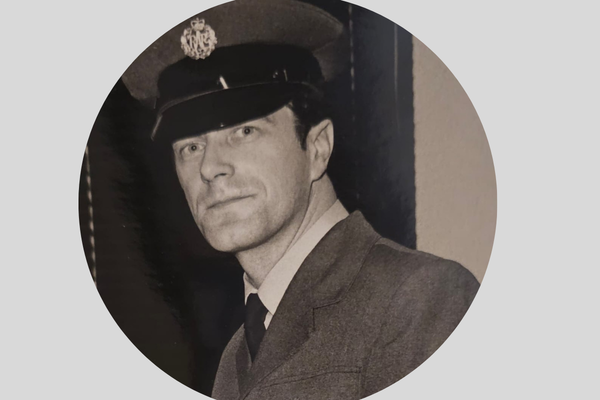

Jane, who is Cabinet Member for Social Services, Health and Wellbeing, had been caring for her father, David, for several years following an Alzheimer’s diagnosis.
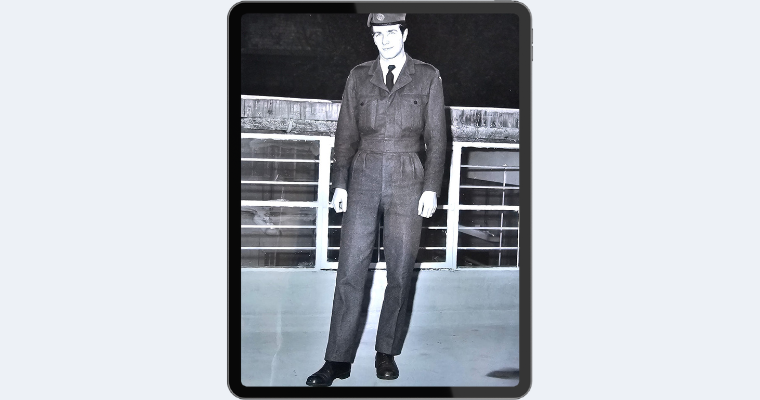
David, who had worked globally as a Royal Air Force photographer and later as a train conductor, lived with Alzheimer’s symptoms for 10 years. During that time, Jane and her mother, Gaynor, helped him cope with the many challenges of the disease, including changes in his personality and physical health.

First trialled in America, the experiential dementia bus offers people a unique insight into some of the challenges faced by people living with dementia.
Using specially designed props and simulations, small groups experience first-hand the confusion, isolation, vulnerability and physical difficulties that can affect people living with dementia in their everyday lives.
Following the session, participants are invited to reflect on the experience and consider how it could influence the way they support people with dementia.
She said:
“My father was always so kind and measured, however dementia is a cruel illness. We spent many years trying to care for and help him; however, I didn’t quite understand what he was going through. The experience helped me to walk alongside him and think about how I could make things easier for him.”
Alzheimer’s disease can affect the way the brain processes noises and light, which can be challenging and distressing for people.
Jane reflected:
“I didn’t realise how overwhelming the constant mix of different sounds were for dad. Following the training, I stopped calling to him from across the room, and instead I’d go over, touch him, and ask him a question. It was a simple change, but he responded so differently to me and I believe it improved the quality of his life and our relationship.”
People living with dementia, including Alzheimer’s, can also experience a decline in dexterity and motor skills, making everyday tasks such as fastening buttons, writing, handling cutlery or opening packaging increasingly difficult.
Jane added:
“Dad had lost six stone in three years. Following the training, I went away and bought new, colourful plates. Dad loved them and chose his plate for each meal. I’d also put food out in a buffet style so he could choose what he wanted to eat. He ate more than I’d ever seen in the last six months of his life.”
“Dad had also been refusing medication, and we tried all manner of interventions to no avail. After introducing the new crockery, we began putting his medication on a tray for him to take after dinner, and it really worked.”

Jane believes that increasing opportunities for experiential training will help build a skilled, compassionate and dementia-aware community and workforce, while also providing valuable insight and support for people caring for loved ones affected by the condition.
She said:
“Dad recently passed away. Following his death, my mum brought down a bag he had bought for me before he became very ill, and it is something I will always treasure. I will always remember what a wonderful father and husband he was. He was a global traveller, loved meeting people through his work as a train conductor, and was one of the kindest people I have known.”
“Although Dad is no longer with us, experiences such as this will help me be a better advocate for others. As a health and social care leader, I am passionate about ensuring our teams understand how to support people living with dementia. Training like this helps us to recognise the challenges people face and how we can support them to live well at home for as long as possible, which is where many people want to be.”
“As part of our Learning and Workforce Development workstream, we are committed to ensuring that staff, leaders and communities across the region have access to high-quality learning opportunities that increase confidence and improve the support available to people living with dementia and their families.”
“Hearing how Jane was able to draw on her learning while caring for her father demonstrates the real impact that this type of training can have. It reinforces the importance of building understanding across our communities and services so that people living with dementia can receive the person-centred support they deserve.”
“We are pleased to have contributed our regional insights and experiences to the development of the new Dementia Strategy for Wales and look forward to seeing the final strategy published later this year.”
Our regional priorities for dementia, and the work being undertaken across Cwm Taf Morgannwg to improve the lives of people affected by dementia, can be found here: https://ctmregionalpartnershipboard.co.uk/dementia

We are proud to be members of
Co-Production Network for Wales.
We are proud to be members of
Co-Production Network for Wales.